How to Choose the Right Form of Aronia
There is more than one way to enjoy this remarkable fruit—here's how to think about which form fits your needs.
One of the advantages of aronia is its versatility. Aronia berries can be enjoyed as whole fruit, pressed into juice, concentrated, dried into powder, placed into capsules, incorporated into gummies, or blended with other complementary fruits such as Montmorency tart cherries.
There is not necessarily one "best" form of aronia. The right choice depends upon how you want to use the fruit, the flavor you enjoy, the convenience you need, and the type of aronia ingredient you want in your diet.
For the research behind each form's composition, see the individual product descriptions on our How to Use Aronia page.
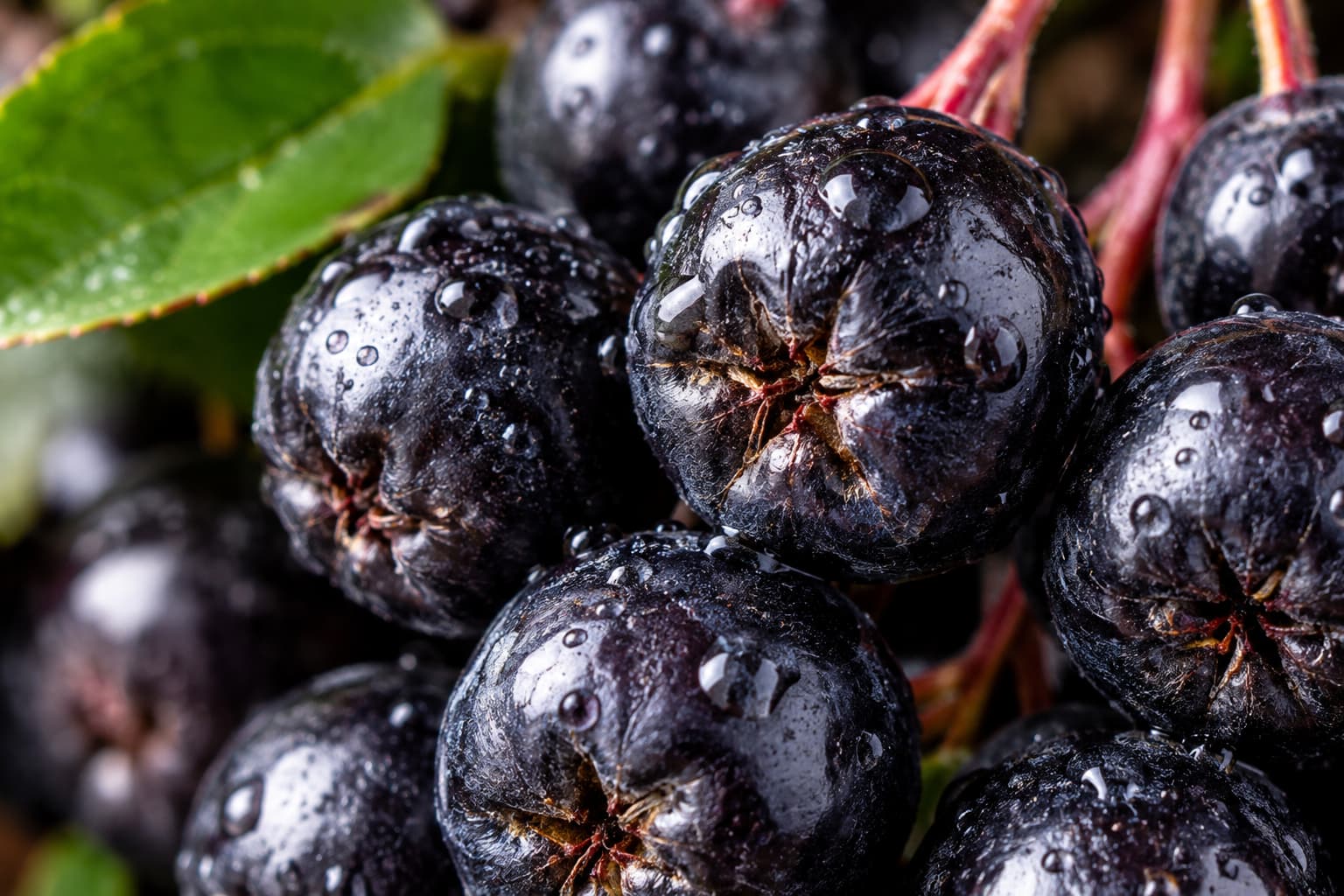
Fresh Aronia Berries
The Straight-From-the-Plant Choice
Best for: People who want to experience the fruit exactly as it grows, with nothing added or removed.
Fresh berries are aronia in its least processed form. Because there's no processing step at all, you get the whole fruit—skin, pulp, seeds, and natural fiber—along with the berry's full natural flavor.
The tradeoff is availability and taste. Fresh aronia has a short harvest window, typically late summer, and its tart, astringent character is at its most pronounced when eaten plain.
Choose this when: You have access to them in season and want the truest, least-processed experience of the fruit.
Fresh-Frozen Aronia Berries
The Whole-Fruit Choice
Best for: Smoothies, breakfast foods, baking, cooking and people who want to consume the whole fruit.
Fresh-frozen berries provide aronia in one of its least processed forms. Because the entire berry is consumed, you receive the skin, pulp, juice, seeds and natural fiber of the fruit.
The tradeoff is flavor. Aronia has a naturally tart and astringent character that can be quite pronounced when the berries are eaten alone. Combining them with sweeter fruits, yogurt, milk, oatmeal or other foods can make them much more enjoyable.
Choose this when: You want the experience and nutritional components of the whole fruit and don't mind incorporating aronia into other foods.
Single-Strength Aronia Juice
The Convenient Liquid Choice
Best for: Daily beverages, smoothies, juice blends and people who prefer drinking aronia rather than eating the whole fruit.
Single-strength juice provides a convenient way to incorporate aronia into a daily routine. It can be consumed in small portions or blended with other juices.
Because much of the insoluble material from the berry is removed during juicing, juice should not be considered nutritionally identical to eating the whole berry. Nevertheless, it provides many of the water-soluble and juice-associated compounds naturally present in the fruit.
Choose this when: You want a convenient liquid form that is easy to measure, drink and blend with other beverages.
Aronia Juice Concentrate
The Versatile Ingredient
Best for: Beverage manufacturing, juice blending, syrups, sauces, gummies and other food products.
Concentrate provides much of the character of aronia juice in a smaller volume because a portion of the water has been removed.
This makes concentrate particularly useful commercially. It is easier to transport and store than an equivalent quantity of single-strength juice and can be reconstituted or used as an ingredient in other products.
Choose this when: You are formulating beverages or food products and want a concentrated aronia ingredient.
Aronia Powder
The Flexible Everyday Choice
Best for: Smoothies, oatmeal, yogurt, drink mixes, baking and functional foods.
Aronia powder can provide an exceptionally convenient way to use aronia without refrigeration. It can be measured into foods and beverages and stored much more easily than frozen fruit.
However, consumers should look carefully at what kind of powder they are purchasing. "Aronia powder" might mean whole-fruit powder, freeze-dried berries ground into powder, juice powder, concentrate powder or another processed ingredient. These products are not necessarily nutritionally equivalent.
Choose this when: You want versatility and convenience, but look for a product that clearly identifies the part of the fruit used and how it was processed.
Encapsulated Aronia Powder
The Convenience Choice
Best for: People who want aronia without its distinctive taste.
For some consumers, aronia's astringency is its biggest disadvantage. Capsules largely eliminate the flavor issue and make aronia easy to incorporate into a daily routine.
The important consideration is what is actually inside the capsule. Whole-berry powder, juice powder and concentrated extracts can have substantially different compositions.
Choose this when: Convenience and avoiding aronia's strong taste are your priorities—and select products that clearly disclose the form and amount of aronia in each serving.
Aronia Gummies
The Easy-to-Enjoy Choice
Best for: Consumers looking for a convenient, flavorful and approachable form of aronia.
Gummies can make aronia particularly accessible to people who might otherwise avoid the fruit because of its astringency.
But gummies deserve careful label reading. The presence of aronia on the front of the package does not tell you how much aronia is actually contained in each serving. Consider the amount and form of aronia used, serving size, added sugars and other ingredients.
Choose this when: Convenience and taste are important, while paying attention to how much actual aronia the product provides.
Aronia + Montmorency Tart Cherry Juice
The Blended Choice
Best for: People who enjoy aronia's benefits but prefer a softer, more familiar flavor.
Montmorency tart cherry is a natural pairing partner for aronia. Aronia contributes its deep color and its own polyphenol profile; tart cherry contributes a brighter, more familiar sweet-tart flavor that can help soften aronia's natural astringency.
As with any blended product, the specific composition depends on how much of each fruit is used and in what form—so the same "check what's actually in the product" principle applies here too.
Choose this when: You want aronia's benefits in a more approachable, easier-to-drink flavor.
Quick Guide: Which Form Is Right for You?
| Aronia Form | Especially Useful For | Major Advantage | Consideration |
|---|---|---|---|
| Fresh Berries | In-season snacking, no-processing preference | Truest, least-processed form | Short season, most astringent |
| Fresh-Frozen Berries | Smoothies, cereal, yogurt, baking | Whole fruit and natural fiber | Strong astringent taste |
| Single-Strength Juice | Drinking and juice blending | Convenient liquid form | Less whole-fruit fiber |
| Juice Concentrate | Manufacturing and formulation | Concentrated and efficient | Usually diluted or formulated |
| Aronia Powder | Smoothies, foods and baking | Shelf-stable and versatile | Powders differ considerably |
| Encapsulated Powder | Daily convenience | Little or no aronia taste | Check ingredient type and amount |
| Aronia Gummies | Convenient, approachable use | Easy and enjoyable | Check aronia content and added sugar |
| Aronia + Tart Cherry Juice | Daily flavorful beverage | Combines two complementary fruits | Check actual juice composition |
A Simple Principle
Whatever form you choose, know what is in the product. Look beyond the word "Aronia" on the front of the package.
Ask:
- What form of aronia does it contain?
- How much aronia is in a serving?
- Is it whole fruit, juice, concentrate, powder or extract?
- What other ingredients have been added?
Aronia's growing popularity has resulted in many different products. Understanding these differences allows consumers to choose the form that best fits their diet, lifestyle and intended use.